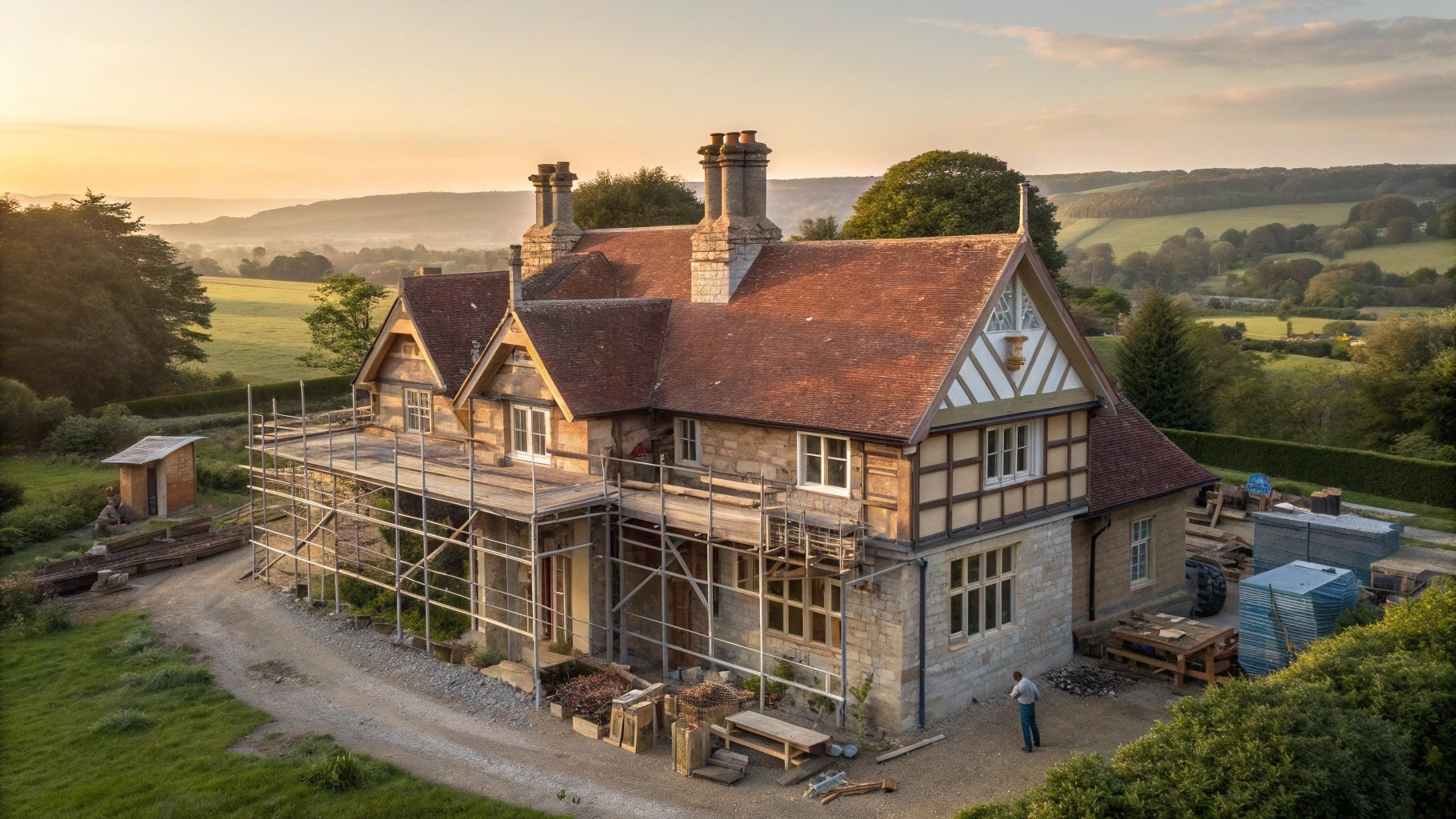
Period properties hold a special place in the UK housing market, offering character, charm, and architectural beauty that modern homes simply can't match. As an experienced residential surveyor specializing in historic buildings, I've inspected hundreds of Victorian, Edwardian, and Georgian properties across England and Wales, helping buyers navigate the unique challenges and opportunities these homes present.
Whether you're drawn to the high ceilings and ornate plasterwork of a Victorian terrace, the elegant proportions of an Edwardian semi, or the classical symmetry of a Georgian townhouse, understanding what you're buying is crucial. This comprehensive guide covers everything you need to know before purchasing a period property, from essential surveys to common defects and renovation considerations.
What Defines a Period Property?
In the UK property market, "period property" typically refers to homes built before 1919, encompassing several distinct architectural eras:
Georgian Period (1714-1837)
Georgian homes are characterized by:
- Symmetrical facades - Balanced window arrangements and central doorways
- Sash windows - Classic vertical sliding windows with multiple panes
- Classical proportions - Rooms with excellent height and light
- Solid walls - Typically brick, sometimes rendered, no cavity
- Original features - Fireplaces, paneling, cornicing, shutters
- Generous room sizes - High ceilings (9-12 feet typical)
Victorian Period (1837-1901)
Victorian properties are the most common period homes, featuring:
- Bay windows - Distinctive projecting windows, often two-story
- Ornate details - Decorative brickwork, tile paths, stained glass
- High ceilings - Typically 10-11 feet on ground floors
- Terraced layout - Common in urban areas with rear extensions
- Original features - Cast iron fireplaces, picture rails, ceiling roses
- Slate roofs - Durable natural slate tiles
- Solid walls - Single-skin brick construction, 9-inch (230mm) thick
Edwardian Period (1901-1918)
Edwardian homes represent a transition to lighter, airier designs:
- Larger windows - More glass than Victorian homes
- Simpler decoration - Less ornate than Victorian period
- Wider plots - More generous gardens than Victorian terraces
- Better layouts - Improved functionality and flow
- Mock Tudor details - Timber framing effects on some properties
- Parquet flooring - Herringbone wood floors common
Why Commission a Level 3 Building Survey?
For any period property, I strongly recommend a RICS Level 3 building survey rather than a basic Level 2 survey. Here's why:
Reasons Period Properties Need Level 3 Surveys
- Age-related deterioration - Materials and construction methods from 100+ years ago show wear
- Solid wall construction - More vulnerable to damp penetration than modern cavity walls
- Historic alterations - Decades of modifications may hide structural issues
- Foundation differences - Shallow foundations prone to movement
- Hidden defects - Period features can conceal serious problems
- Non-standard construction - Historic methods require specialist knowledge
- Renovation planning - Detailed survey helps plan improvements
What a Level 3 Survey Covers
A comprehensive building survey on a period property includes:
- Structural analysis - Assessment of walls, floors, roof structure
- Foundation investigation - Checking for movement, subsidence, heave
- Damp assessment - Moisture meter testing, identification of sources
- Timber inspection - Checking for rot, woodworm, beetle infestation
- Roof examination - Slate condition, lead work, chimney stacks
- Services review - Age and condition of electrics, plumbing, heating
- Detailed defect analysis - Comprehensive listing of all issues
- Repair specifications - Detailed recommendations and costs
- Future maintenance advice - Planning for ongoing care
Cost: Level 3 surveys for period properties typically cost £800-£1,800 depending on property size and location. This investment can save you tens of thousands by identifying problems before purchase.
Common Issues in Period Properties
Based on thousands of surveys of period properties, here are the most frequent issues we identify:
1. Structural Movement and Subsidence
Period properties were often built with shallow foundations (sometimes just 18 inches deep) making them susceptible to ground movement.
Signs to Watch For:
- Diagonal cracks wider than 1-2mm, especially around windows and doors
- Stepped cracking following brick or stone courses
- Doors and windows that stick or don't close properly
- Sloping or uneven floors
- Gaps between walls and ceilings or walls and floors
- Bulging or leaning walls
Common Causes:
- Clay soil shrinkage - Tree roots extracting moisture from clay
- Historic settlement - Initial settling that has stabilized
- Drainage problems - Water washing away supporting soil
- Nearby excavation - Construction work affecting foundations
- Failed repairs - Previous underpinning or repairs that didn't work
Typical Costs:
- Structural engineer's investigation: £500-£1,500
- Monitoring for 12 months: £300-£800
- Underpinning (if needed): £10,000-£50,000+
- Crack repairs and redecoration: £2,000-£8,000
Surveyor's advice: Not all cracks indicate active problems. Many period properties show historic movement that has stabilized. Your chartered surveyor can distinguish between historic and active issues.
2. Damp Problems
Solid wall construction makes period properties particularly vulnerable to moisture penetration.
Types of Damp in Period Properties:
Rising Damp:
- Properties built before 1875 often have no damp proof course (DPC)
- Later properties may have slate or bitumen DPCs that have failed
- Symptoms: tide marks, salt deposits, peeling plaster up to 1 meter high
- Treatment cost: £1,500-£4,000 for chemical DPC and replastering
Penetrating Damp:
- Water entering through solid walls, especially on exposed elevations
- Common at failed pointing, around windows, and at chimney breasts
- Symptoms: damp patches, mold, staining on internal walls
- Treatment: repointing (£40-£70/m²), render repairs, window repairs
Condensation:
- Period properties often lack adequate ventilation after modifications
- Single-glazed windows and poor insulation increase risk
- Symptoms: mold on cold surfaces, streaming windows
- Solutions: improved ventilation, heating, insulation (£500-£3,000)
3. Roof Issues
Period property roofs often use traditional materials requiring specialist knowledge.
Common Roof Problems:
- Slate deterioration - Natural slate can delaminate after 100+ years (£80-£150/m² for replacement)
- Failed valleys - Lead or zinc valleys leak with age (£1,500-£4,000 to renew)
- Chimney stack issues - Deteriorated brickwork, failed flaunching (£800-£3,000 per stack)
- Timber decay - Roof timbers may show rot or beetle infestation (varies significantly)
- Inadequate insulation - Original roofs have no insulation (£600-£1,500 to improve)
4. Electrical and Heating Systems
Services in period properties often require complete replacement.
Electrical Issues:
- Original wiring is unsafe and must be replaced (£3,000-£6,000 full rewire)
- Inadequate number of sockets for modern living
- No earthing or old fuse boxes instead of modern consumer units
- Surface-mounted wiring requiring careful concealment
Heating Considerations:
- No central heating in many original period properties
- Individual room fireplaces as only heating (inefficient)
- Retrofitted systems may be dated or inadequate
- Installation cost for new system: £4,000-£8,000
5. Timber Defects
Period properties use extensive timber susceptible to various problems:
Common Timber Issues:
- Wet rot - Decayed timber around windows, doors, roof timbers (treatment £500-£3,000)
- Dry rot - Serious fungal attack, expensive to eradicate (£2,000-£10,000+)
- Woodworm - Beetle damage to floor joists, roof timbers (treatment £400-£1,500)
- Death watch beetle - Specific to older oak timbers (specialist treatment required)
6. Windows and Doors
Original features add character but may need work:
- Rotten sashes - Bottom rails deteriorate from moisture (repair £200-£500 per window)
- Failed glazing putty - Allows water penetration (£50-£150 per window)
- Painted shut - Years of decoration seal windows closed
- Broken sash cords - Windows won't stay open (£80-£150 per window to repair)
- Single glazing - Poor thermal and acoustic performance
Important: In conservation areas or listed buildings, you may not be able to replace original windows with double glazing. Secondary glazing (£200-£500 per window) provides improvement while preserving original features.
Listed Buildings and Conservation Areas
Listed Building Consent
If your period property is listed (Grade I, II*, or II), you need Listed Building Consent for:
- Any alterations affecting character
- Changes to windows, doors, or roofing materials
- Installation of new services
- Internal alterations affecting historic features
- Extensions or outbuildings
Process implications:
- Applications take 8-12 weeks minimum
- Must use appropriate materials and methods
- Costs are typically 20-30% higher than standard renovations
- Unauthorized work can result in enforcement action and fines
Conservation Area Rules
Properties in conservation areas face restrictions on:
- External appearance changes
- Tree removal (need consent for trees over 75mm diameter)
- Demolition or significant alterations
- Installation of satellite dishes or solar panels on prominent elevations
Renovation and Improvement Costs
When budgeting for a period property, factor in these typical improvement costs:
Essential Repairs
| Work Required | Typical Cost Range |
|---|---|
| Full rewire (3-bed property) | £3,000-£6,000 |
| New central heating system | £4,000-£8,000 |
| Damp treatment and replastering | £1,500-£5,000 |
| Roof repairs (partial) | £2,000-£8,000 |
| Full roof renewal | £10,000-£25,000 |
| External repointing | £40-£70 per m² |
| Sash window restoration | £200-£500 per window |
| Chimney repairs | £800-£3,000 per stack |
Improvement Projects
| Improvement | Typical Cost Range |
|---|---|
| Kitchen renovation | £10,000-£30,000 |
| Bathroom renovation | £5,000-£15,000 |
| Rear extension (4x4m) | £30,000-£60,000 |
| Loft conversion | £25,000-£50,000 |
| Basement conversion | £40,000-£80,000+ |
| External insulation | £8,000-£15,000 |
| Secondary glazing (whole house) | £3,000-£8,000 |
Energy Efficiency Considerations
Period properties typically have poor energy performance, but improvements must respect historic character:
Appropriate Improvements
- Loft insulation - Usually acceptable, 270mm minimum (£300-£600)
- Floor insulation - Under suspended timber floors (£20-£30/m²)
- Secondary glazing - Preserves original windows while improving efficiency
- Draught proofing - Careful sealing of gaps while maintaining ventilation
- Heating upgrades - Modern efficient boilers (must vent appropriately)
- Breathable internal insulation - Specialist systems for solid walls (£100-£150/m²)
Improvements to Avoid
- External wall insulation - Changes appearance, may not be permitted
- Cavity wall insulation - Most period properties have solid walls anyway
- UPVC windows - Inappropriate for period properties, often not permitted
- Impermeable wall coatings - Trap moisture in solid walls
Important: Period properties need to "breathe." Using modern impermeable materials can trap moisture and cause serious damage. Always use breathable materials like lime mortar and lime plaster.
Financing Considerations
Mortgage Availability
Some lenders are cautious about period properties, particularly if your building survey identifies significant issues:
- Structural problems may result in mortgage refusal or retention
- Listed buildings may require specialist lenders
- Properties requiring major works might need renovation mortgages
- Thatched properties require specialist insurance and lending
Insurance Costs
Period property insurance is typically 20-40% more expensive due to:
- Higher rebuild costs (£2,000-£3,000/m² vs £1,200-£1,800/m² for modern homes)
- Specialist materials and tradespeople required
- Listed building requirements
- Greater risk of certain defects
Renovation Finance
If buying a period property needing work, consider:
- Bridging loans - Short-term finance for purchase and renovation (expensive but flexible)
- Renovation mortgages - Lender releases funds in stages as work progresses
- Self-build mortgages - For substantial renovation projects
- Personal loans - For smaller improvement projects
Working with the Right Professionals
Choosing Your Surveyor
For period properties, ensure your residential surveyor has:
- RICS membership (MRICS or FRICS qualification)
- Period property experience - Ask how many similar properties they've surveyed
- Local knowledge - Familiarity with regional construction methods
- Detailed reporting - Comprehensive analysis not just brief notes
- Professional indemnity insurance - Adequate cover for property value
Other Essential Professionals
- Solicitor - Experience with listed buildings and conservation area issues
- Structural engineer - For detailed foundation or structural analysis
- Architect - Experienced with period properties and planning constraints
- Specialist contractors - Skilled in traditional construction methods
- Conservation officer - Local authority contact for listed building queries
Questions to Ask Before Buying
About the Property
- Is the property listed? What grade?
- Is it in a conservation area?
- What work has been done? Were necessary consents obtained?
- Are there any outstanding issues with the local authority?
- When were services last updated?
- Is there any history of structural movement?
- What condition is the roof?
- Have there been any insurance claims?
About Running Costs
- What are typical heating costs?
- What's the council tax band?
- What's the property's EPC rating?
- Are there any shared costs (e.g., maintenance of shared access)?
- What's the buildings insurance cost?
Frequently Asked Questions
Should I buy a period property if I'm a first-time buyer?
Period properties can be excellent first purchases, but go in with eyes open. Commission a comprehensive Level 3 building survey from a RICS chartered surveyor experienced with older properties. Budget realistically for ongoing maintenance (typically 1-2% of property value annually). If you're comfortable with higher running costs, potential renovation projects, and the quirks of older homes, period properties offer character and often better locations than modern equivalents. However, if you prefer low-maintenance modern living, they may not be ideal.
How much should I budget for renovation after buying?
As a residential surveyor, I recommend budgeting at least 10-15% of the purchase price for immediate essential works on a period property in reasonable condition. For properties needing significant renovation, budget 20-40% or more. Your Level 3 survey will identify priority repairs and provide cost estimates. Always add 20% contingency for unexpected discoveries once work begins. For a £300,000 Victorian house in good condition, budget £30,000-£45,000 for improvements; for one needing major work, £60,000-£120,000 isn't unusual.
Are period properties more expensive to run?
Yes, period properties typically cost 30-50% more to run than modern homes. Expect higher heating bills due to solid walls, single glazing, and high ceilings. Buildings insurance costs 20-40% more due to higher rebuild costs and specialist materials. Maintenance is more frequent and expensive - period properties typically require £3,000-£8,000 annually for upkeep vs £1,000-£3,000 for modern homes. However, many owners feel the character, location, and quality of construction justify these higher costs.
Can I make changes to a listed building?
You can make changes, but need Listed Building Consent for any work affecting character. This includes alterations to original features, window replacements, new services, extensions, and even some repairs. Applications take 8-12 weeks and must use appropriate materials and methods. Unauthorized work is a criminal offense carrying fines up to £20,000 and potential prison sentences. Work with experienced architects and conservation officers. Many sympathetic improvements are possible - the key is proper consultation and consent before starting.
What if the survey identifies structural movement?
First, don't panic - many period properties show historic movement that has stabilized. Your surveyor will distinguish between old and active issues. If concerned about active movement, they'll recommend a structural engineer's investigation (£500-£1,500). This may include monitoring for 6-12 months. If active subsidence is confirmed, options include: renegotiating price to reflect underpinning costs (£10,000-£50,000+), requesting seller completes repairs, obtaining specialist insurance, or walking away. Many buyers successfully purchase properties with historic movement at reduced prices.
Is it worth restoring original features?
Absolutely. Original features significantly increase both value and appeal of period properties. Restoring rather than replacing sash windows costs £200-£500 per window vs £800-£1,500 for new equivalents. Original fireplaces, cornicing, and period details add 5-10% to property value. In conservation areas and listed buildings, preservation may be required. Even in standard period properties, buyers increasingly seek authenticity. Budget for careful restoration by skilled craftspeople rather than cheap modern replacements. The investment typically repays through higher value and buyer appeal.
Should I be concerned about asbestos in period properties?
Period properties built before 1920 rarely contain asbestos as it wasn't widely used until the 1930s-1980s. However, check for later additions: asbestos cement garage roofs, textured coatings (Artex), insulation around old boilers, and floor tiles in extensions. Your surveyor will note suspected asbestos-containing materials. If identified, asbestos is only dangerous when disturbed and releasing fibers. Encapsulation (£300-£800) is often adequate; removal costs £1,500-£4,000 for typical garage or coating removal. Always use licensed contractors for asbestos work.
Conclusion: Is a Period Property Right for You?
Period properties offer unique character, excellent craftsmanship, and often superior locations compared to modern homes. However, they demand more maintenance, higher running costs, and patient understanding of their quirks.
Period properties are ideal if you:
- Appreciate architectural character and original features
- Enjoy renovation and improvement projects
- Can budget for higher maintenance and running costs
- Value quality construction and generous proportions
- Desire established locations with mature gardens
- Have patience for inevitable maintenance issues
Consider carefully if you:
- Want low-maintenance, energy-efficient modern living
- Have tight budgets with no contingency for repairs
- Dislike the inconvenience of ongoing maintenance
- Prefer open-plan layouts and modern systems
- Want minimal running costs and high energy efficiency
As a residential surveyor specializing in period properties, my advice is clear: commission a comprehensive Level 3 building survey before buying, budget realistically for repairs and improvements, and embrace the character and history these wonderful homes offer. With proper professional advice and realistic expectations, buying a period property can be one of the most rewarding property decisions you'll make.
Planning to Buy a Period Property?
Our experienced RICS chartered surveyors specialize in Victorian, Edwardian, and Georgian properties. We provide detailed Level 3 building surveys identifying all issues and providing comprehensive repair advice and costs.
Request a Survey Quote Learn About Our Surveys