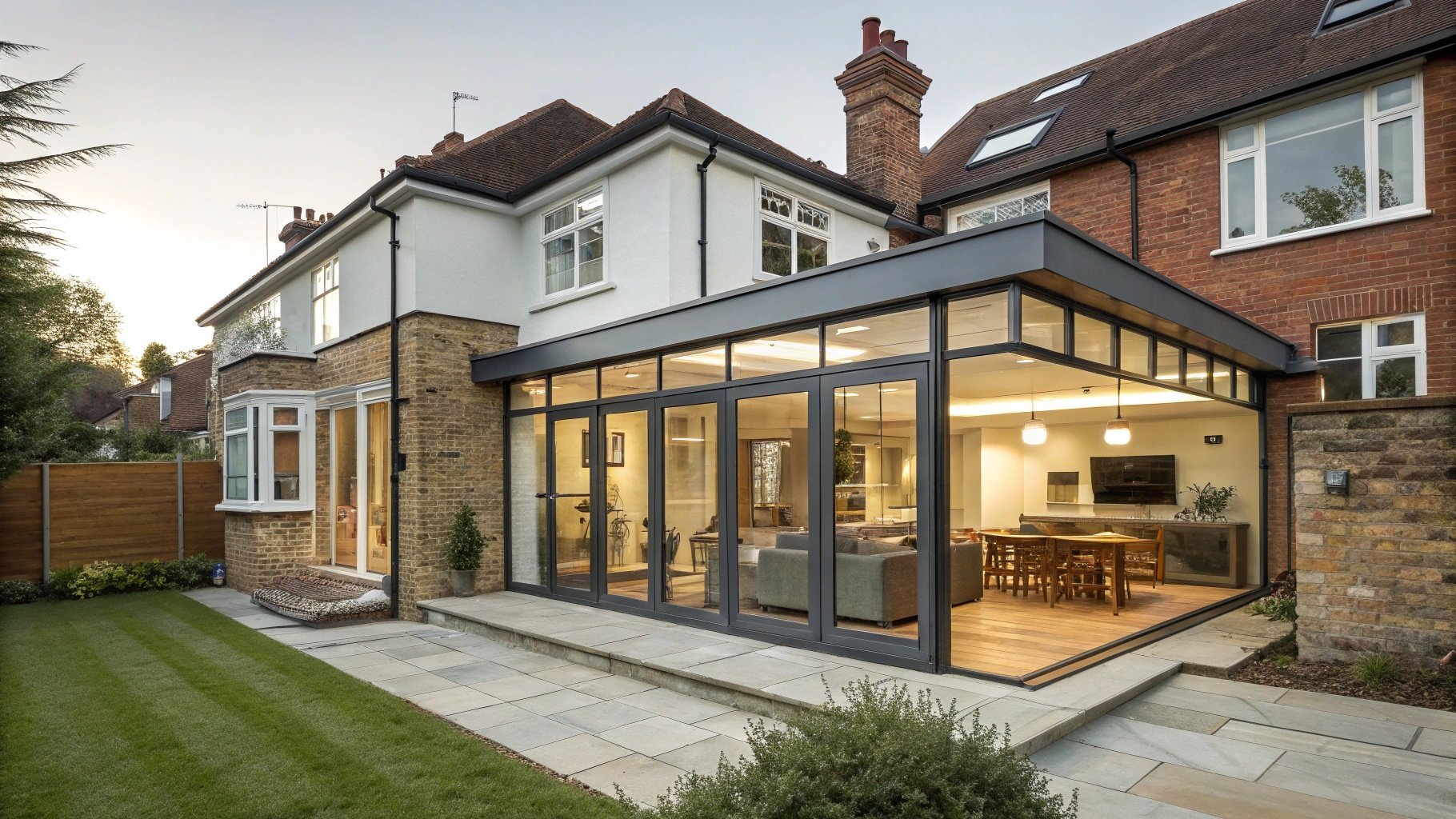
As an experienced residential surveyor and chartered surveyor who has advised on hundreds of home alteration projects across England and Wales, I've seen both successful transformations that add significant value and costly mistakes that could have been avoided with proper planning. Whether you're considering a rear extension, loft conversion, or major renovation, understanding the role of property surveys, building regulations, and planning requirements is essential for project success.
This comprehensive guide explains how professional surveys inform alteration planning, when you need planning permission versus permitted development, building regulations compliance, and realistic cost guidance for common projects.
Why Commission a Survey Before Alterations?
Many homeowners assume surveys are only for property purchases, but pre-alteration surveys are invaluable:
What Pre-Alteration Surveys Reveal
- Structural capacity - Can walls support additional loads? Are foundations adequate?
- Hidden defects - Existing issues that must be addressed before work begins
- Construction methods - Understanding how your property is built
- Building regulation implications - What current standards mean for your plans
- Constraints and opportunities - Limitations and possibilities you hadn't considered
- Cost implications - Realistic budgeting based on actual conditions
Types of Surveys for Alterations
Level 3 Building Survey
- Comprehensive assessment of entire property
- Detailed structural analysis
- Identification of all defects and constraints
- Cost: £800-£1,500 depending on property size
- Best for: Major projects, older properties, significant concerns
Structural Engineer Survey
- Focused structural assessment
- Load calculations for new openings or floors
- Foundation assessment for extensions
- Cost: £500-£1,500 depending on complexity
- Best for: Specific structural elements, load-bearing wall removal
Party Wall Survey
- Required when work affects shared walls
- Documents condition before and after work
- Cost: £700-£1,500 (usually split with neighbor)
- Best for: Semi-detached, terraced, or attached properties
Common Home Alteration Projects
1. Rear Extensions
The most popular home improvement, adding valuable living space:
Single-Story Rear Extension
Typical cost: £30,000-£60,000 (4m × 3m extension)
Planning permission: Often permitted development (see criteria below)
Building regulations: Always required
Duration: 8-12 weeks from start to completion
Permitted development criteria:
- Maximum 3m extension for attached houses (4m for detached)
- No higher than existing roof
- Not covering more than 50% of garden area
- Materials similar to existing property
- Notifying neighbors (prior approval process)
Two-Story Rear Extension
Typical cost: £50,000-£100,000
Planning permission: Usually required
Building regulations: Always required
Structural considerations: Foundation design critical, substantial works
2. Loft Conversions
Converting unused attic space into habitable rooms:
Types and Costs
Velux/Rooflight Conversion (Simplest)
- Cost: £25,000-£45,000
- Adds windows to existing roofline
- No external changes to roof structure
- Often permitted development
- Duration: 4-6 weeks
Dormer Conversion
- Cost: £40,000-£65,000
- Adds projecting dormer window
- Increases headroom and floor space
- May be permitted development (rear only, size limits)
- Duration: 6-10 weeks
Hip-to-Gable Conversion
- Cost: £50,000-£70,000
- Extends sloping roof to vertical gable
- Maximizes loft space
- Often requires planning permission
- Duration: 8-12 weeks
Key Considerations
- Headroom: Minimum 2.2m height required
- Floor joists: May need strengthening for habitable loads
- Stairs: Compliant staircase essential (affects floor below)
- Fire safety: Escape routes, fire doors, smoke alarms mandatory
- Insulation: Must meet current Building Regulations
3. Basement Conversions
Cost: £50,000-£100,000+ (highly variable)
Planning: Usually required
Complexity: High - structural engineers essential
Considerations: Waterproofing, underpinning, drainage, party wall issues
4. Kitchen Extensions
Often combined with rear extensions for open-plan living:
- Extension + kitchen: £50,000-£90,000
- Knocking through only: £15,000-£30,000
- Structural works: Steel beams for removed walls £2,000-£5,000
- Building regs: Always required for structural alterations
5. Garage Conversions
Cost: £10,000-£25,000
Planning: Often permitted development
Building regs: Required (insulation, damp-proofing, ventilation)
Value added: Less than other extensions (loses parking space)
Planning Permission vs Permitted Development
What is Permitted Development?
Permitted development rights allow certain building works without formal planning permission. However, restrictions apply:
Common Permitted Development Rights
- Single-story rear extension: Up to 3m (attached), 4m (detached)
- Two-story side extension: If meets specific criteria
- Loft conversion: If roof height increase under 150mm
- Garage conversion: Usually permitted
- Rear dormer: Within size limits, rear elevation only
Where Permitted Development Doesn't Apply
- Conservation areas - Stricter rules, many rights removed
- Listed buildings - No permitted development, all changes need consent
- Flats - Very limited permitted development rights
- Article 4 directions - Local restrictions removing rights
- Previous extensions - Rights may be exhausted
When Full Planning Permission is Needed
- Extensions exceeding permitted development limits
- Front extensions (usually)
- Major roof alterations
- Outbuildings over certain sizes
- Material changes to external appearance
- New access to roads
Planning application costs:
- Householder application: £258 (2026)
- Processing time: 8 weeks typically
- Architect/designer fees: £1,500-£5,000
- Pre-application advice: £100-£300 (recommended)
Building Regulations Explained
Unlike planning permission (which controls external appearance and impact), Building Regulations ensure structural safety, fire safety, energy efficiency, and accessibility.
When Building Regulations Apply
Building Regulations approval required for:
- All extensions (even if planning permission not needed)
- Loft conversions creating habitable space
- Structural alterations (removing walls, etc.)
- New bathrooms, kitchens (drainage and ventilation)
- Window/door replacements (unless certified installer)
- Electrical work (Part P regulations)
- Re-roofing (insulation standards)
Building Regulations Process
- Submit application - Before work starts (£200-£1,000 fee depending on scale)
- Plans check - Building Control reviews and approves drawings
- Notify inspections - At key stages (foundations, damp course, etc.)
- Inspections - Building Control officer visits site
- Completion certificate - Issued when work complies
Critical: Completion certificates are essential for:
- Property value protection
- Future sales (solicitors request certificates)
- Insurance validity
- Legal compliance
The Role of Chartered Surveyors
How Surveyors Help Plan Alterations
As a residential surveyor, I provide clients planning alterations with:
Pre-Project Assessment
- Feasibility analysis - Is your project structurally possible?
- Constraint identification - Drainage, utilities, boundaries affecting plans
- Existing defect documentation - Issues requiring resolution first
- Party wall implications - Neighbor consultation requirements
- Planning/regulations guidance - What approvals you'll need
Structural Advice
- Load-bearing wall identification
- Foundation capacity for extensions
- Floor joist capacity for loft conversions
- Beam specifications for new openings
- Roof structure capability
Budget Reality Check
- Realistic cost estimates based on actual conditions
- Hidden cost identification (asbestos removal, drainage relocation)
- Contingency recommendations (typically 15-20%)
- Value-for-money guidance
Value Added by Common Alterations
Understanding return on investment helps prioritize projects:
| Alteration Type | Typical Cost | Value Added | ROI |
|---|---|---|---|
| Single-story rear extension | £40,000 | £50,000-£70,000 | 125-175% |
| Two-story rear extension | £75,000 | £80,000-£120,000 | 107-160% |
| Loft conversion | £45,000 | £50,000-£80,000 | 111-178% |
| Basement conversion | £75,000 | £60,000-£90,000 | 80-120% |
| Garage conversion | £18,000 | £10,000-£25,000 | 56-139% |
| Kitchen extension | £60,000 | £70,000-£100,000 | 117-167% |
Important factors affecting value:
- Location - London/Southeast see higher returns
- Property value - Higher-value properties see better percentage returns
- Quality of work - Poor execution can reduce value
- Over-improvement - Don't exceed neighborhood standards significantly
Frequently Asked Questions
Do I need a surveyor if I'm using an architect?
Architects and surveyors provide complementary but different services. Architects design the alteration - creating plans, elevations, and aesthetic solutions. Surveyors assess the existing property's condition and structural capacity - identifying constraints, defects, and feasibility. For optimal results, use both: a building surveyor or structural engineer first to assess feasibility and identify constraints, then an architect to design within those parameters. Some architects offer structural advice, but chartered surveyors and structural engineers provide specialist expertise in existing building assessment that architects may lack. Cost: surveyor £800-£1,500, architect £1,500-£5,000+ depending on project complexity.
Can I do work without Building Regulations approval?
Legally, no - Building Regulations apply to most alterations regardless of whether planning permission is needed. Working without approval is illegal and causes serious problems: mortgage lenders refuse lending on properties with unauthorized work, buyers' solicitors demand retrospective certificates or large indemnity insurance, buildings insurance may be invalidated, and local authorities can serve enforcement notices requiring work to be opened up for inspection or even removed. Regularization is possible (applying for Building Control retrospectively) but costs more, causes disruption opening up completed work for inspection, and may require expensive remedial work if standards aren't met. Always obtain Building Regulations approval before starting work.
What's a Party Wall Agreement and do I need one?
The Party Wall Act 1996 governs work affecting shared (party) walls between properties. You need Party Wall Agreements when: building on or near boundary lines, excavating within 3-6 metres of neighbors' foundations, or working on shared walls (removing chimney breasts, underpinning). Process: serve Party Wall Notice 2 months before work (1 month for just party walls), neighbor can consent or dissent (appointing surveyor), agreed surveyor produces Party Wall Award detailing work and protecting both parties, costs typically £700-£1,500 split between parties. Don't skip this - it's a legal requirement and protects you from neighbor disputes. Neighbors can obtain court injunctions stopping unauthorized work.
How much should I budget for contingency?
As a residential surveyor advising on alterations, I recommend minimum 15-20% contingency for home improvement projects. Unexpected issues are common: hidden structural problems discovered when walls opened, asbestos requiring removal (£1,500-£4,000), drainage requiring relocation, ground conditions worse than expected for foundations, materials cost increases, design changes during construction, and weather delays. Older properties need higher contingencies (20-25%). Simple projects like garage conversions can manage with 10-15%. Complex works like basements or major structural alterations need 25-30%. Better to budget conservatively and be pleasantly surprised than face half-finished projects when money runs out.
Should I move out during major alterations?
Depends on work scope and your tolerance. Single-story rear extensions: usually manageable to stay (kitchen/living disruption 8-12 weeks), though dust, noise, and facilities access are challenging. Loft conversions: generally possible to remain (work above, not throughout property), though noise and dust permeate. Two-story extensions or major internal reconfigurations: seriously consider moving out - multiple rooms affected, utilities disrupted, dust everywhere. Basement conversions: definitely move out - extreme disruption, structural work, damp, noise. Consider: young children or elderly residents cope less well, working from home is difficult during construction, and eating, bathing, and sleeping arrangements become very challenging. Budget £800-£1,500/month for rental accommodation if moving out temporarily.
Conclusion: Plan Properly for Success
Successful home alterations require thorough planning, professional expertise, and realistic budgeting. As a chartered surveyor with extensive alteration project experience, my key advice is: invest time and money upfront in proper assessment and planning - it will save you significantly more during construction.
Essential steps for alteration success:
- Commission pre-alteration surveys - Understand your property before designing
- Engage professionals early - Surveyors, architects, structural engineers
- Verify permissions required - Planning, Building Regulations, Party Wall
- Budget realistically - Include 15-20% contingency minimum
- Use quality contractors - Don't choose purely on price
- Obtain all certificates - Building Control completion essential
- Consider long-term value - Don't over-improve for your area
Home alterations represent significant investment - both financially and emotionally. Proper professional advice from experienced RICS surveyors, architects, and structural engineers ensures your project succeeds, adds value, and avoids costly mistakes.
Planning a Home Alteration Project?
Our experienced RICS chartered surveyors provide pre-alteration assessments, structural advice, and feasibility studies for extensions, conversions, and major renovations across England and Wales.
Request Pre-Alteration Survey View Survey Services